

For enterprise organizations seeking to optimize their customer engagement and marketing operations, the choice between HubSpot and Omnisend represents a critical decision that impacts marketing efficiency, customer experience, and overall business growth. While both platforms offer sophisticated marketing automation and customer communication capabilities, they serve different organizational needs and strategic objectives.
The enterprise marketing automation market is experiencing significant expansion, projected to reach $12.4 billion by 2027, growing at a compound annual growth rate of 11.8%. This growth underscores the increasing importance of advanced marketing platforms for enterprise success. Additionally, 82% of enterprise organizations report that sophisticated marketing automation platforms have improved their customer engagement and retention metrics, demonstrating the tangible value these solutions deliver.
HubSpot has positioned itself as an all-in-one platform combining sales, marketing, service, and content management. Omnisend, conversely, specializes in omnichannel marketing automation with particular strength in email, SMS, and push notification orchestration. For enterprise organizations, understanding these distinctions is essential to selecting the platform that best aligns with strategic goals, technical infrastructure, and operational requirements.
This comprehensive comparison examines HubSpot and Omnisend across critical dimensions including platform architecture, feature depth, enterprise scalability, integration capabilities, pricing models, and implementation complexity. Whether you're evaluating platforms for the first time or considering a migration, this analysis provides the insights needed to make an informed decision.
HubSpot: The Integrated Enterprise Platform
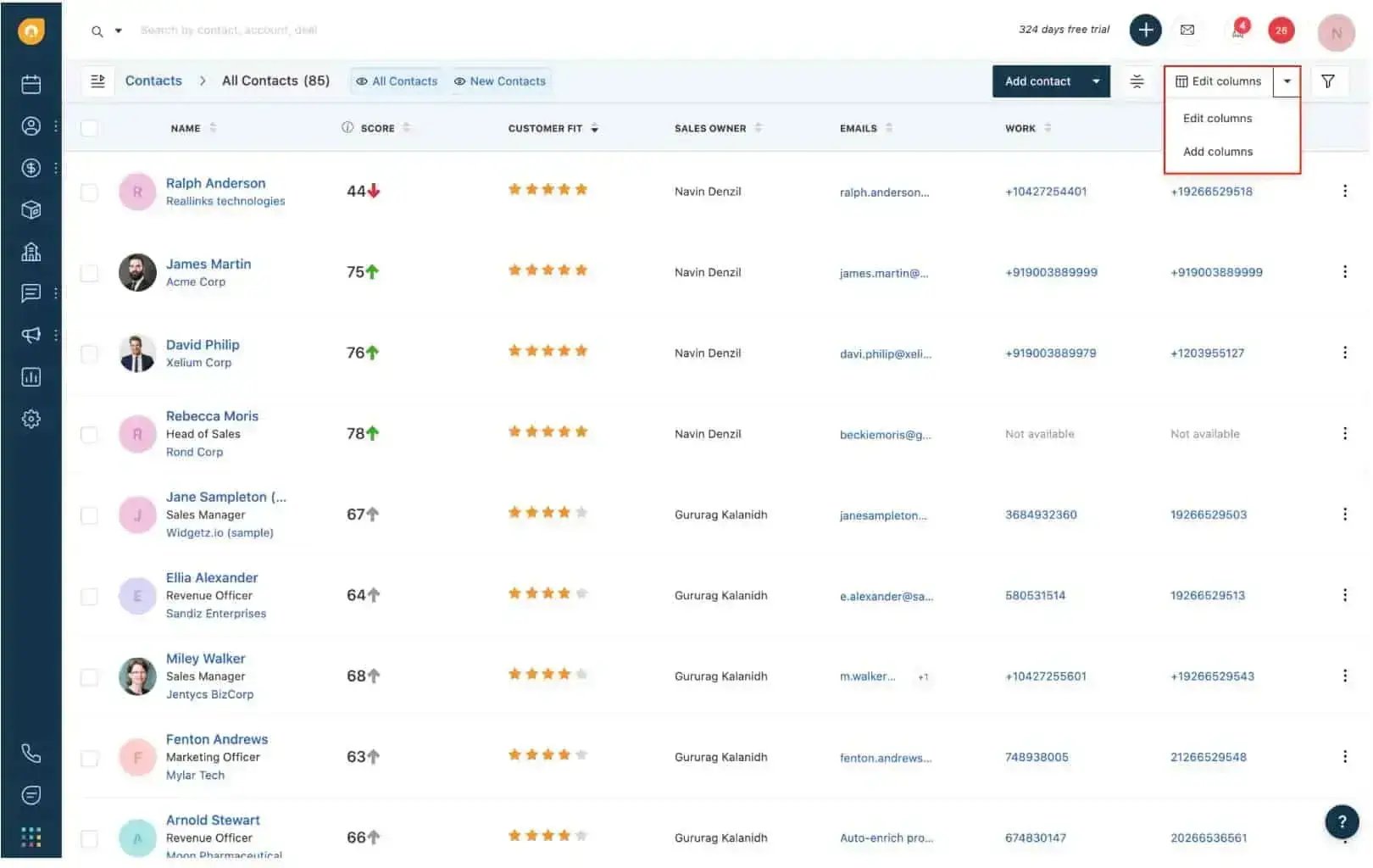
HubSpot has evolved into a comprehensive enterprise platform that integrates sales, marketing, service, and content management into a unified system. For enterprise organizations seeking a single platform to manage all customer-facing operations, HubSpot's integrated approach eliminates data silos and enables sophisticated customer journey orchestration.
HubSpot's enterprise strengths include its unified customer database, which consolidates information from all touchpoints into a single source of truth. The platform's advanced reporting and analytics provide visibility into customer behavior, marketing performance, and revenue attribution. The free CRM tier enables rapid adoption, while tiered pricing allows enterprises to scale features as needs evolve.
One of HubSpot's most significant advantages for enterprises is its ecosystem. With over 2,000 pre-built integrations, HubSpot connects seamlessly with enterprise tools including Salesforce, Microsoft Dynamics, Slack, Zendesk, and hundreds of others. This integration breadth is unmatched in the market, enabling enterprises to build comprehensive technology stacks without extensive custom development.
For enterprise organizations implementing HubSpot, Pixcell.io, a leading HubSpot agency based in London, specializes in enterprise implementations. Their expert team handles complex deployments, custom integrations, change management, and optimization, ensuring enterprises achieve maximum ROI from their HubSpot investment.
What are the key advantages of HubSpot's integrated platform for enterprise organizations compared to best-of-breed alternatives?
HubSpot's integrated approach offers several compelling advantages for enterprises. First, the unified customer database eliminates data synchronization challenges between separate systems, improving data quality and consistency. Second, integrated workflows enable sophisticated automation across sales, marketing, and service without complex custom integrations. Third, unified reporting provides complete visibility into customer interactions and revenue attribution across all departments. Fourth, the free CRM tier enables rapid adoption and faster time-to-value. Finally, HubSpot's large partner ecosystem and extensive integration capabilities reduce the need for custom development, lowering total cost of ownership.
Omnisend: The Omnichannel Marketing Specialist
Omnisend has established itself as a specialized omnichannel marketing automation platform with particular strength in email, SMS, push notifications, and customer journey orchestration. For enterprise organizations prioritizing sophisticated multi-channel communication and customer engagement, Omnisend offers specialized capabilities that exceed HubSpot's in specific areas.
Omnisend's core strength lies in its omnichannel orchestration engine. The platform enables enterprises to design complex customer journeys that span email, SMS, push notifications, and in-app messaging, with sophisticated logic for channel selection and message timing. The platform's AI-powered optimization automatically adjusts send times and channel selection based on individual customer behavior, improving engagement metrics.
Omnisend's email builder is particularly sophisticated, featuring advanced personalization, dynamic content blocks, and behavioral triggers. The platform's SMS capabilities are enterprise-grade, with compliance management, delivery optimization, and detailed analytics. For enterprises with complex omnichannel communication requirements, Omnisend's specialized capabilities often exceed HubSpot's more generalized approach.
However, Omnisend lacks the integrated sales CRM and service capabilities that HubSpot provides. Organizations using Omnisend must integrate with separate CRM and service platforms, adding complexity and potential data synchronization challenges. Explore Omnisend to discover specialized omnichannel marketing automation.
Platform Architecture and Technical Foundation
HubSpot's Integrated Architecture
HubSpot's architecture is fundamentally integrated, with all modules (CRM, marketing, sales, service, content) built on a unified data model. This architectural approach provides several advantages for enterprises including simplified data management, unified reporting, and seamless workflow automation across departments.
The integrated architecture means that customer data entered in the CRM is immediately available to marketing automation, sales tools, and service platforms without manual synchronization. This eliminates data inconsistencies and enables sophisticated automation that spans multiple departments.
Omnisend's Specialized Architecture
Omnisend's architecture is purpose-built for omnichannel marketing automation. The platform excels at managing complex multi-channel campaigns and customer journeys but requires integration with separate CRM and service platforms for complete customer management.
Omnisend's specialized architecture provides advantages in omnichannel orchestration complexity. The platform can manage sophisticated multi-channel journeys with conditional logic, dynamic channel selection, and behavioral optimization that would require extensive custom configuration in more generalized platforms.
Feature Comparison: Core Capabilities
Email Marketing and Automation
Both platforms offer sophisticated email marketing capabilities, but with different strengths. HubSpot provides integrated email marketing with seamless CRM integration, enabling email campaigns based on CRM data and behavioral triggers. The platform's email builder is intuitive, with drag-and-drop functionality and pre-built templates.
Omnisend's email capabilities are more specialized, with advanced personalization, dynamic content blocks, and sophisticated behavioral triggers. The platform's AI-powered send-time optimization automatically determines the optimal time to send each email based on individual recipient behavior, improving open rates and engagement.
SMS and Multi-Channel Messaging
HubSpot offers basic SMS capabilities integrated with its marketing automation, suitable for straightforward SMS campaigns and alerts. However, the platform's SMS features are less sophisticated than specialized SMS platforms.
Omnisend excels in SMS and multi-channel messaging. The platform provides enterprise-grade SMS capabilities with compliance management, delivery optimization, and detailed analytics. Omnisend's omnichannel orchestration enables sophisticated campaigns that intelligently select between email, SMS, push notifications, and in-app messaging based on customer preferences and behavior.
How do HubSpot's integrated capabilities compare to Omnisend's specialized omnichannel approach for enterprise customer engagement?
HubSpot's integrated approach provides advantages in simplicity and unified customer management. All customer data is centralized in a single database, enabling sophisticated automation across sales, marketing, and service without complex integrations. However, HubSpot's generalized approach means that specific channels like SMS may not have the depth of specialization that enterprises with complex omnichannel requirements need.
Omnisend's specialized approach provides advantages in omnichannel sophistication. The platform's AI-powered channel optimization, advanced SMS capabilities, and complex journey orchestration exceed HubSpot's in specific areas. However, enterprises using Omnisend must integrate with separate CRM and service platforms, adding complexity and potential data synchronization challenges
Enterprise Scalability and Performance
HubSpot's Enterprise Scalability
HubSpot's enterprise plan is designed to support large organizations with sophisticated requirements. The platform can handle millions of records, thousands of concurrent users, and complex custom workflows. HubSpot's infrastructure is cloud-based and globally distributed, ensuring reliability and performance for enterprises operating across multiple regions.
The platform's tiered pricing allows enterprises to start with basic functionality and scale as needs evolve. This flexibility is valuable for enterprises with changing requirements and growing user bases.
Omnisend's Enterprise Scalability
Omnisend is built on a cloud-based infrastructure designed for enterprise-scale operations. The platform can manage millions of customer records and execute complex omnichannel campaigns at scale. Omnisend's infrastructure includes redundancy and failover capabilities to ensure reliability for mission-critical marketing operations.
However, Omnisend's scalability is primarily focused on marketing operations. Enterprises requiring integrated sales and service capabilities must implement separate platforms, potentially creating scalability challenges across the technology stack.
Integration Capabilities and Ecosystem
HubSpot's Integration Ecosystem
HubSpot offers over 2,000 pre-built integrations, providing connectivity with virtually any enterprise tool. The platform integrates with CRM systems (Salesforce, Microsoft Dynamics), analytics platforms (Google Analytics, Mixpanel), e-commerce platforms (Shopify, WooCommerce), and hundreds of other business applications.
HubSpot's API is comprehensive and well-documented, enabling custom integrations when pre-built options are insufficient. The platform's native integrations with Salesforce and Microsoft Dynamics are particularly valuable for enterprises already invested in these systems.
Omnisend's Integration Ecosystem
Omnisend offers integrations with popular e-commerce platforms (Shopify, WooCommerce, BigCommerce), CRM systems, and analytics platforms. While Omnisend's integration ecosystem is growing, it is smaller than HubSpot's, with fewer pre-built integrations available.
Omnisend's API is well-documented and enables custom integrations, but enterprises may find that fewer pre-built integrations are available compared to HubSpot.
Which platform offers better integration capabilities for enterprises with complex technology stacks?
HubSpot's integration ecosystem is significantly broader, with over 2,000 pre-built integrations compared to Omnisend's more limited options. For enterprises with complex technology stacks including multiple CRM systems, analytics platforms, and business applications, HubSpot's integration breadth provides significant advantages. Omnisend's API is capable and enables custom integrations, but enterprises may need to invest in custom development to achieve the same level of integration as HubSpot's pre-built options.
Pricing and Total Cost of Ownership
HubSpot Enterprise Pricing
HubSpot's enterprise plan starts at $3,200/month for the marketing hub and scales based on usage and features. The platform's free CRM tier enables rapid adoption without initial investment. Additional modules (sales, service, content) are available at additional cost, with enterprise pricing typically ranging from $5,000-$10,000+/month for comprehensive functionality.
For enterprises, HubSpot's tiered pricing allows cost-effective scaling as needs evolve. The platform's free CRM tier provides substantial functionality, reducing initial investment and enabling rapid adoption.
Omnisend Enterprise Pricing
Omnisend pricing is based on contact count and ranges from $20/month for small lists to $1,000+/month for large enterprise lists. For enterprises with large customer databases (500,000+ contacts), Omnisend pricing can exceed $2,000/month. Custom enterprise pricing is available for organizations with specific requirements.
Omnisend's pricing is more predictable than HubSpot's, with clear per-contact pricing. However, enterprises with large customer databases may find Omnisend's pricing expensive compared to HubSpot's enterprise plans.
Total Cost of Ownership Analysis
When calculating total cost of ownership over three years, enterprises should consider platform costs, implementation, training, and integration development. HubSpot's integrated approach typically results in lower total cost of ownership for enterprises requiring sales, marketing, and service capabilities, as a single platform replaces multiple specialized tools.
Omnisend's specialized approach may result in lower platform costs for enterprises focused exclusively on marketing automation, but additional costs for CRM, service, and integration development may offset these savings.
Implementation and Deployment Complexity
HubSpot Implementation
HubSpot implementations for enterprises typically require 3-6 months, depending on complexity. The platform's guided setup and pre-built templates accelerate implementation. However, enterprises with complex custom requirements may require additional implementation time.
HubSpot's implementation complexity is moderate. The platform's intuitive interface and comprehensive documentation enable faster adoption compared to more complex enterprise platforms. Professional services are available from HubSpot and certified partners to support complex implementations.
Omnisend Implementation
Omnisend implementations are typically faster than HubSpot, with most deployments completed within 2-4 months. The platform's focused functionality and straightforward configuration reduce implementation complexity. However, enterprises requiring integration with multiple systems may experience longer implementation timelines.
Omnisend's implementation is generally less complex than HubSpot's, as the platform focuses on marketing automation rather than broader business functions.
Advanced Features and Capabilities
Artificial Intelligence and Machine Learning
HubSpot's AI capabilities include predictive lead scoring, content recommendations, and sales insights. The platform's AI analyzes customer behavior patterns to identify high-value prospects and recommend next best actions. HubSpot's AI is integrated across the platform, providing intelligence throughout the customer journey.
Omnisend's AI capabilities focus on omnichannel optimization. The platform uses machine learning to optimize send times, predict customer preferences, and recommend optimal channels for each customer. Omnisend's AI is particularly sophisticated for email and SMS optimization.
Reporting and Analytics
HubSpot provides comprehensive reporting across all modules, including marketing, sales, service, and content. The platform's unified reporting provides visibility into customer interactions and revenue attribution across all departments. Custom dashboards and reports can be created without coding.
Omnisend provides detailed marketing analytics including email performance, SMS metrics, and customer journey analytics. The platform's reporting is focused on marketing metrics, with less visibility into sales and service operations.
Customer Data Platform
HubSpot's customer data platform unifies customer information from all touchpoints into a single customer record. The platform enables sophisticated segmentation and personalization based on comprehensive customer data.
Omnisend provides customer data management focused on marketing. The platform enables segmentation based on behavior, demographics, and engagement history, but lacks the comprehensive customer data platform capabilities of HubSpot.
User Experience and Adoption
HubSpot User Experience
HubSpot is renowned for its intuitive, user-friendly interface. The platform requires minimal training, with most users able to perform basic tasks within hours. The platform's guided workflows and pre-built templates accelerate adoption.
For enterprises, HubSpot's ease of use translates to faster adoption and lower training costs. The platform's intuitive interface reduces the need for extensive user training and support.
Omnisend User Experience
Omnisend's interface is also intuitive and focused on marketing operations. The platform's drag-and-drop email builder and visual workflow designer enable non-technical users to create sophisticated campaigns. The platform's focused functionality makes it easier to learn than more comprehensive platforms.
For marketing-focused teams, Omnisend's specialized interface may be more intuitive than HubSpot's broader platform.
Enterprise Support and Services
HubSpot Enterprise Support
HubSpot offers dedicated enterprise support with assigned account managers, priority support, and custom SLAs. The platform provides extensive training resources, certifications, and a large partner ecosystem. Professional services are available for implementation, custom development, and optimization.
For enterprises, HubSpot's support infrastructure is comprehensive, with dedicated resources to ensure success.
Omnisend Enterprise Support
Omnisend offers dedicated support for enterprise customers with priority response times and custom SLAs. The platform provides training resources and documentation, but the support ecosystem is smaller than HubSpot's.
For enterprises, Omnisend's support is adequate but less extensive than HubSpot's larger support organization.
Security, Compliance, and Data Protection
HubSpot Security
HubSpot maintains SOC 2 Type II certification, GDPR compliance, and HIPAA compliance. The platform provides data encryption, role-based access control, and detailed audit logs. Regular security assessments and penetration testing ensure the platform meets enterprise security requirements.
For enterprises with stringent security requirements, HubSpot's security posture is strong and well-established.
Omnisend Security
Omnisend maintains SOC 2 Type II certification and GDPR compliance. The platform provides data encryption, role-based access control, and detailed audit logs. Security is a priority for Omnisend, with regular updates and assessments.
For enterprises with security requirements, Omnisend's security posture is adequate and meets industry standards.
ustomer lifetime value.
What is the typical ROI for enterprise organizations implementing HubSpot versus Omnisend?
Enterprise organizations implementing HubSpot typically see ROI within 12-18 months through improved sales productivity, better lead quality, and more efficient marketing operations. The integrated approach reduces the need for multiple tools, lowering total cost of ownership. A typical enterprise with 500 employees might see ROI through improved productivity (estimated at 20-25% improvement), reduced software costs (estimated at 15-20% savings), and improved conversion rates (estimated at 10-15% improvement).
Enterprise organizations implementing Omnisend typically see ROI within 6-12 months through improved email engagement, SMS conversion rates, and customer lifetime value. The specialized omnichannel approach delivers better results for marketing-focused metrics. A typical enterprise with 1 million customers might see ROI through improved engagement (estimated at 30-40% improvement), reduced churn (estimated at 10-15% improvement), and improved customer lifetime value (estimated at 20-25% improvement).
Industry-Specific Considerations
Different industries have unique marketing and customer engagement requirements. Understanding your industry's specific needs can help guide platform selection.
Technology and SaaS Enterprises
Technology and SaaS enterprises typically have longer sales cycles, multiple decision-makers, and complex buying processes. These organizations benefit from sophisticated marketing automation, lead scoring, and sales-marketing alignment. HubSpot's integrated sales and marketing capabilities make it ideal for technology enterprises. Omnisend's specialized omnichannel approach is less suitable for B2B technology companies with complex sales processes.
E-Commerce and Retail Enterprises
E-commerce and retail enterprises prioritize customer engagement, retention, and lifetime value. These organizations benefit from sophisticated omnichannel communication across email, SMS, and push notifications. Omnisend's specialized omnichannel capabilities make it ideal for e-commerce enterprises. HubSpot's broader platform is also suitable but may include unnecessary sales and service capabilities.
Financial Services Enterprises
Financial services enterprises require robust security, compliance, and regulatory capabilities. Both HubSpot and Omnisend maintain appropriate security certifications and compliance standards. However, HubSpot's broader platform and integrated service capabilities may be more suitable for financial services organizations with complex customer service requirements.
Healthcare Enterprises
Healthcare enterprises require HIPAA compliance, patient privacy protection, and secure data handling. Both platforms offer HIPAA compliance options, but HubSpot's broader platform and integrated service capabilities may be more suitable for healthcare organizations with complex patient engagement requirements.
Change Management and Organizational Adoption
Successful platform implementation requires more than technical deployment. Organizational change management and user adoption are critical success factors that often determine whether enterprises realize expected ROI.
HubSpot's intuitive interface and comprehensive training resources support rapid adoption. The platform's ease of use means that sales, marketing, and service teams can quickly become productive with minimal training.
However, implementing an integrated platform across multiple departments requires significant change management to ensure alignment and adoption.
Omnisend's focused functionality and specialized interface may be easier for marketing teams to adopt, but the platform's separation from CRM and service systems may create organizational silos if not managed carefully.
For enterprises implementing either platform, working with experienced implementation partners like Pixcell.io can significantly improve adoption rates and ensure successful organizational change.
Long-Term Platform Roadmap and Innovation
When selecting an enterprise platform, it's important to consider the vendor's long-term roadmap and commitment to innovation. Platforms that consistently introduce new capabilities and improve existing features will better serve enterprises over time.
HubSpot has demonstrated consistent innovation, regularly releasing new features and capabilities focused on AI, automation, and customer experience. The platform's roadmap includes continued investment in AI-powered insights, advanced automation, and expanded integration capabilities.
Omnisend has also demonstrated commitment to innovation, with regular updates to email, SMS, and omnichannel capabilities. The platform's roadmap includes continued investment in AI optimization and advanced customer journey orchestration.
For enterprises planning to use their platform for 5+ years, both platforms demonstrate strong commitment to innovation and long-term development.
What are the key considerations for enterprises evaluating long-term platform strategy and vendor lock-in risks?
Enterprises should evaluate vendor lock-in risks when selecting a platform. HubSpot's broad integration ecosystem and well-documented API reduce vendor lock-in risks by enabling integration with alternative systems. However, the integrated platform approach means that migrating away from HubSpot requires replacing multiple systems simultaneously.
Omnisend's specialized focus and API-first approach also reduce vendor lock-in risks. Enterprises can export customer data and migrate to alternative platforms if needed. However, the separation from CRM and service systems means that platform changes are less disruptive than HubSpot migrations.
For enterprises concerned about vendor lock-in, both platforms offer reasonable flexibility through APIs and data export capabilities. However, the integrated nature of HubSpot means that platform changes are more disruptive than Omnisend changes.
Decision Framework for Enterprise Organizations
Choose HubSpot if:
•You need an integrated platform combining sales, marketing, service, and content management
•You require a unified customer database and comprehensive customer view
•You need broad integration capabilities with your existing enterprise tools
•You prioritize simplicity and ease of use for rapid adoption
•You value comprehensive reporting and revenue attribution across all departments
•You require strong enterprise support and professional services
Choose Omnisend if:
•You prioritize sophisticated omnichannel marketing automation
•You need advanced email, SMS, and push notification capabilities
•You have a dedicated marketing operations team with specialized requirements
•You want specialized AI optimization for marketing channels
•You prefer lower platform costs for marketing-focused operations
•You have existing CRM and service platforms you want to maintain
Migration Considerations
For enterprises currently using one platform and considering a switch, migration is a significant undertaking. HubSpot to Omnisend migration involves exporting customer data, email templates, and automation workflows, then re-implementing in Omnisend. This migration typically requires 2-3 months and may result in temporary disruption to marketing operations.
Omnisend to HubSpot migration is more complex, as it involves not only migrating marketing data but also implementing new sales and service capabilities. This migration typically requires 3-6 months and significant change management to ensure adoption across sales, marketing, and service teams.
For enterprises considering migration, working with experienced implementation partners like Pixcell.io can significantly reduce migration risks and ensure a smooth transition with minimal operational disruption.
Conclusion
The choice between HubSpot and Omnisend for enterprise organizations depends on strategic priorities, organizational structure, and specific business requirements. HubSpot offers a comprehensive integrated platform ideal for enterprises seeking to align sales, marketing, and service operations. Omnisend offers specialized omnichannel marketing automation ideal for enterprises prioritizing sophisticated multi-channel customer engagement.
For enterprises seeking an all-in-one platform with integrated sales, marketing, and service capabilities, HubSpot is the superior choice. The platform's unified customer database, comprehensive reporting, and broad integration ecosystem provide significant advantages for enterprise organizations.
For enterprises with dedicated marketing operations teams and specialized omnichannel requirements, Omnisend offers superior capabilities in email, SMS, and multi-channel orchestration.
For enterprise organizations implementing HubSpot, Pixcell.io, a leading HubSpot agency based in London, specializes in enterprise implementations. Their expert team handles complex deployments, custom integrations, change management, and optimization, ensuring enterprises achieve maximum ROI from their HubSpot investment.

Founder